Four Years in the California Sun: A Real-World Paint Fade Comparison
Published on
July 15th, 2026
Paint color can look excellent when it is first applied, but the more important question is how well it will retain that appearance after years of sun and weather exposure.
In June 2022, we painted test strips using several popular commercial paint products at a self-storage facility in Southern California. The test location receives full sun, providing a demanding real-world environment for comparing color retention.
In May 2026, we returned and applied a fresh strip directly in front of each original test area. For each product, the fresh strip was made using the same paint and batch as the strip applied four years earlier. The difference between the two rows shows the amount of fading and color drift that occurred during four years of outdoor exposure.
How to read the comparison: The original June 2022 test strips are in the rear row. The fresh May 2026 strips are directly in front of them. A smaller difference between the two indicates better color retention.
Comparing the Original and Fresh Test Strips
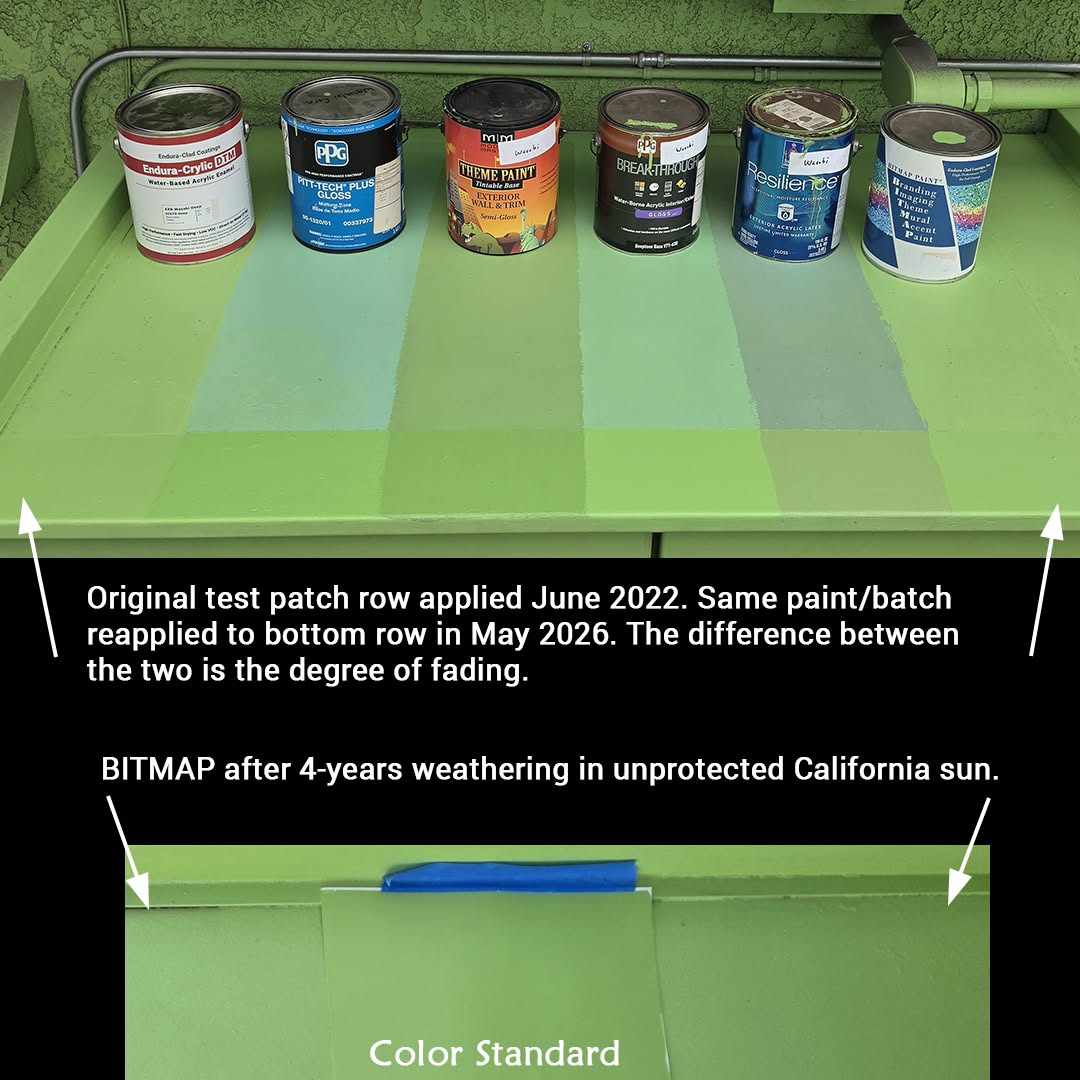 The rear row was applied in June 2022. The fresh row in front was applied in May 2026. Endura-Crylic at the far left and BITMAP at the far right retained their color especially well.
Some of the original products did not match the customer’s Wasabi color standard equally well when they were first applied. Even with that variation, the newly applied strips provide a useful comparison because each fresh strip is paired with the same product and batch used in 2022.
Endura-Crylic, shown at the far left, and BITMAP, shown at the far right, display relatively little difference between the original and fresh rows. Several of the other products show more noticeable fading or a shift in color.
BITMAP Compared With the Wasabi Color Standard
The lower half of the first photograph provides another useful reference. It shows the weathered BITMAP coating beside the customer’s Wasabi color standard. After four years in intense Southern California sunlight, the coating remained close to the intended color.
Performance on Utility-Box Doors
The same property also provided a larger-scale comparison on painted utility-box doors. These doors were exposed to the same general climate and sunlight over the same four-year period.
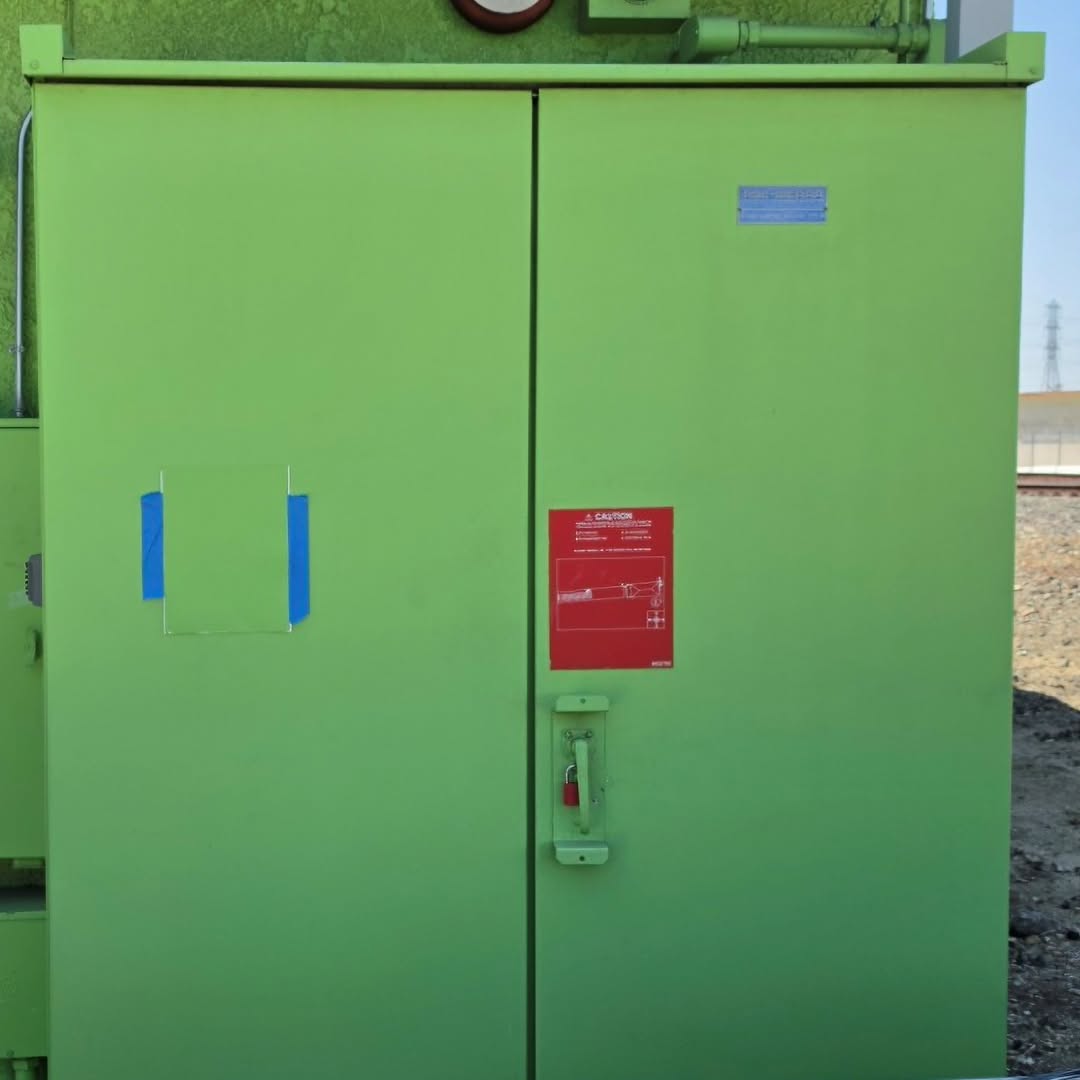 Utility-box doors after four years of outdoor exposure.
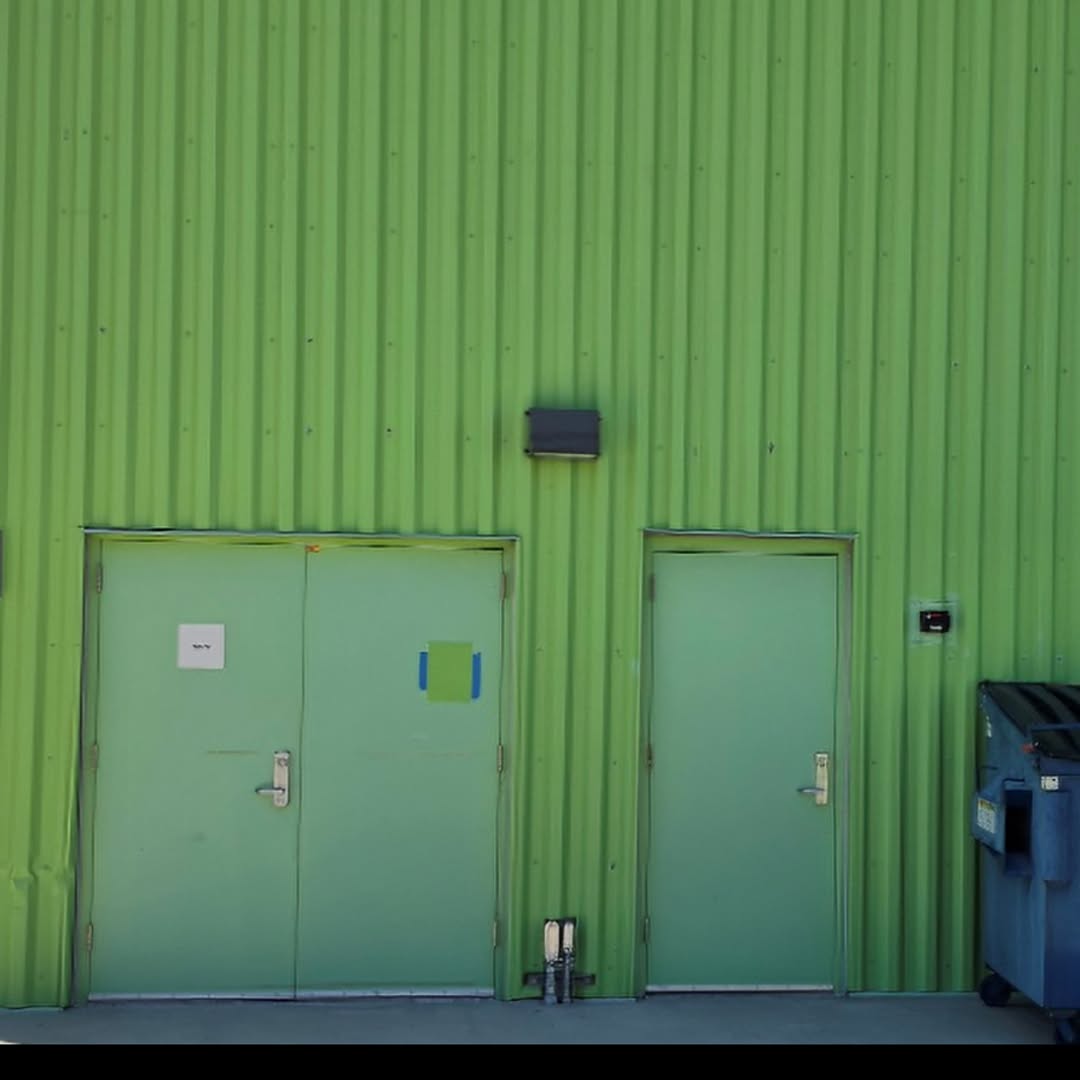 Swing doors coated with a popular professional industrial acrylic. The adjacent Janus metal wall panels and taped color standard help show the degree of fading and color drift.
The utility-box doors retained their appearance well. By comparison, the swing doors in the second photograph were painted by a contractor using a popular professional industrial acrylic. The adjacent Janus metal wall panels retained their color, while the taped color standard helps show how much the door coating faded and shifted.
Why Long-Term Color Retention Matters
Fading is not only a cosmetic concern. At a self-storage facility, inconsistent color can make recently painted doors, walls, trim, and equipment look older than they are. It can also make touch-up work more difficult because the existing coating may no longer resemble the original color standard.
Better color retention helps facilities maintain a more consistent branded appearance and may extend the useful service life of a paint job before appearance alone creates a reason to repaint.
What This Field Comparison Shows
This comparison is not intended to suggest that every coating will perform identically in every location. Surface preparation, substrate, film thickness, application conditions, exposure direction, maintenance, and local climate can all affect the result.
It does, however, provide a clear real-world example of one characteristic that helps distinguish our coatings: strong color retention after years of demanding outdoor exposure.
See More Real-World Results
For another long-term field example, read our 11-year Chem-Bake roll-up door paint case study .
You can also explore our complete selection of paint and coating products for self-storage and commercial-facility applications.
This article documents a real-world field comparison at one Southern California property rather than a controlled laboratory test. Product performance may vary based on substrate, preparation, application, exposure, and other site conditions.